
No products in the cart.
Real Belonging Precedes Belief: 5 Reasons for the Radical Table

1. Introduction: The Search for Real Belonging
There is a universal human ache that transcends geography: the desire for a place where everyone knows your name. We long for the “Cheers” theme song to be our reality—to be truly seen, accepted, and known. In an era of profound isolation, this longing isn’t just sentimental; it’s a survival instinct. If we are to build a true kingdom movement, we must understand that real belonging is the cornerstone. We are not a country club; we are a radical, counter-cultural commitment to one another’s lives, built on the premise that you shouldn’t have to “behave” before you can “belong.”
2. Belonging Must Precede Believing

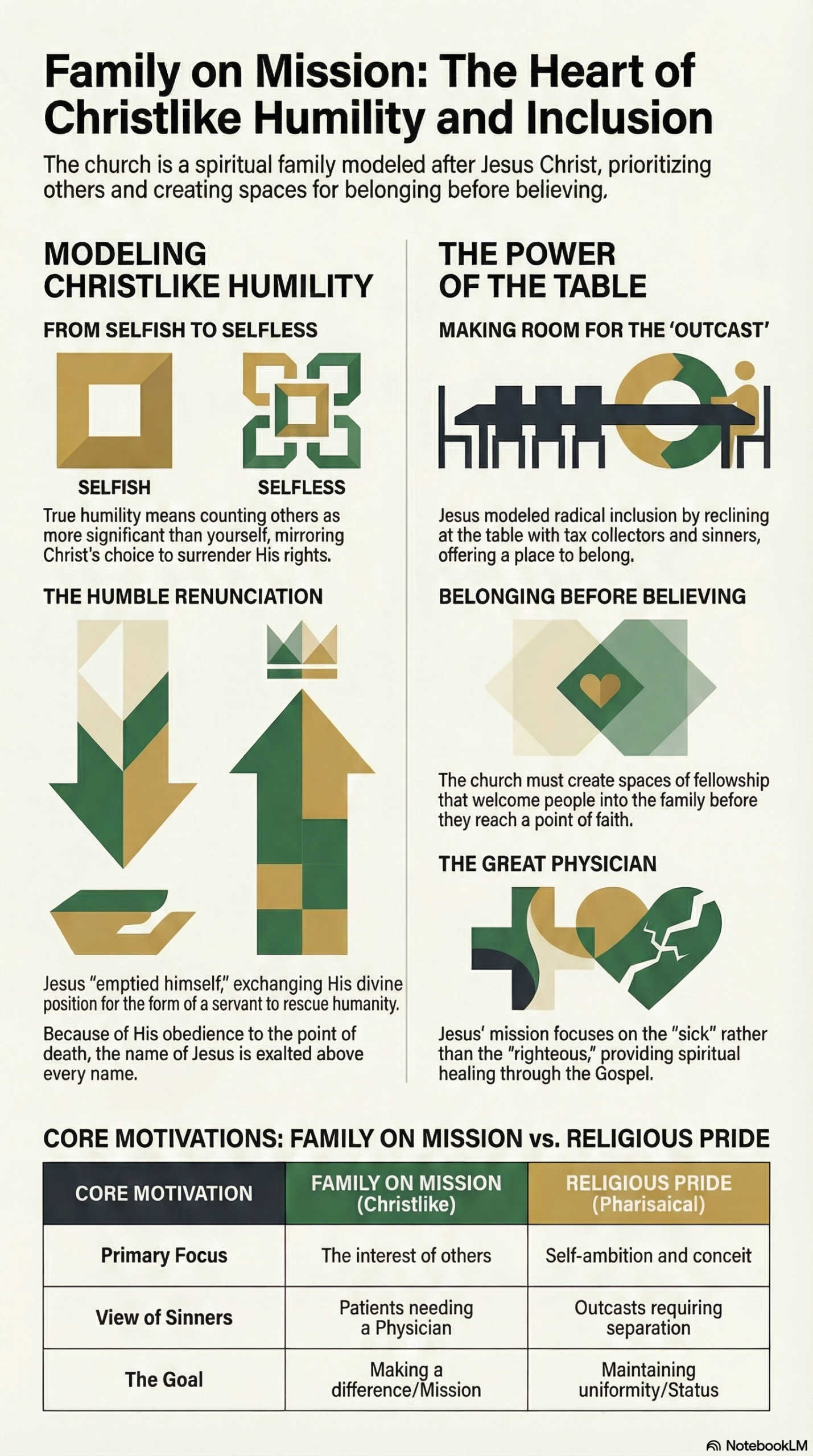
In the biblical account of Levi (Matthew), we see a tax collector—someone the culture classified as “scum” or a traitor. Levi wasn’t just a sinner; he was an outcast. Yet, Jesus’ first interaction wasn’t a lecture on ethics or a demand for a career change. He simply said, “Follow me.”
Levi’s immediate response wasn’t a trip to the synagogue; it was a party. He threw a banquet for his entire circle—the people Pastor Connor calls “Pooky, Ray Ray, Bonita, and Jose.” These were the “tax collectors and sinners,” and Jesus didn’t just tolerate them; He reclined with them. This is the heart of the Potluck Principle: creating a space where people belong before they have their lives “figured out.”
“Jesus made room at the table… providing a place to belong even before they believed.”
3. Takeaway 1: Humility is the Voluntary Surrender of Rights
In a “me-first” culture, we often mistake humility for a lack of confidence. But the Christlike model is far more sophisticated. According to Philippians 2, true humility is a “Humble Renunciation”—the voluntary surrender of power and privileges for the benefit of another.
Jesus, though being God, “did not count equality with God a thing to be grasped.” He moved from Rights to Responsibility. Humility isn’t about losing your power; it’s about choosing not to use it for yourself. When a community prioritizes the interests of others as a core value, it shifts from “selfish ambition” to a selfless stability that can sustain a movement.
4. Takeaway 2: The “Hospital for Sinners” Re-frame
We often treat spiritual communities like a “museum for saints”—a pristine gallery where people display their virtues like artifacts. This perspective is toxic. A true Family on Mission functions as a “hospital for sinners.”
If we view sin as a disease of the soul rather than a mere moral failure, our perspective on brokenness changes. A physician exists for the ill, not the healthy. By adopting the “Great Physician” metaphor, we build a community that is comfortable with “sickness.” This re-frame removes the pressure to perform and allows genuine healing to occur in an environment of grace.
“We’re not a museum for saints. We’re a hospital for sinners.”
5. Takeaway 3: Everything You Need is in the “Storehouse”

We often complicate spiritual growth with religious gatekeeping, but Colossians 2 suggests a simpler reality: Christ is a literal “storehouse” of wisdom and knowledge. He is the open-source abundance for the human soul.
This simplifies the modern spiritual search. We don’t need a religious intermediary to tell us how to access God. Jesus broke the confessional barriers to give us direct access to the throne of grace. If everything we need—identity, wisdom, strength—is “hidden in Christ,” then spiritual maturity is simply about frequenting the storehouse.
6. Takeaway 4: Core Values Require a “Walk,” Not Just a “Wall”
Most families and organizations have values like “Excellence” or “Integrity” written on their walls. But the real test of a value is whether it shapes how you actually live. Anyone can transcribe a value; only a Family on Mission walks it out. Authentic community identity is built through a clear progression of these “walked out” values: Intimacy, Integrity, Compassion, and Impact.
7. Conclusion: The Eternity Perspective

On earth, we might lose an hour to a time change, but within a true spiritual family, we gain eternity. This is the difference between a country club and a kingdom. We are a family on mission, motivated by the gospel and moving toward a permanent home. As you look at your own community, ask yourself: Are you just a spectator checking your watch, or are you pulling out a chair and making room at the table for someone else?
Bible Verse References (ESV)
Here are the verses referenced in the text and other supporting scriptures, followed by a short hint.
- Matthew 9:9-10 “Jesus saw a man called Matthew sitting at the tax office, and he said to him, ‘Follow me.’… And as Jesus reclined at table in the house, behold, many tax collectors and sinners came…”
Hint: The foundational model of belonging before believing at Levi’s party. - Philippians 2:5-7 “Have this mind among yourselves, which is yours in Christ Jesus, who, though he was in the form of God, did not count equality with God a thing to be grasped, but emptied himself…”
Hint: Defining humility as the “Humble Renunciation” and voluntary surrender of rights. - Mark 2:17 “And when Jesus heard it, he said to them, ‘Those who are well have no need of a physician, but those who are sick. I came not to call the righteous, but sinners.'”
Hint: Supporting the “Hospital for Sinners” metaphor and the function of the Great Physician. - Colossians 2:2-3 “…to reach all the riches of full assurance of understanding and the knowledge of God’s mystery, which is Christ, in whom are hidden all the treasures of wisdom and knowledge.”
Hint: Acknowledging Christ as the complete “storehouse” of everything we need. - Romans 15:7 “Therefore welcome one another as Christ has welcomed you, for the glory of God.”
Hint: The ultimate command to create a “Radical Table” by welcoming others as we were welcomed.
SOURCE: Family On Mission Sermon Series, Metropolitan Baptist Church


