
Unlocking the Biblical Mystery of the Vine and the Cup

1. Introduction: Unlocking the Ancient Mystery of the Vine and the Cup
Throughout biblical literature, symbols derived from ancient agrarian life—vineyards, winepresses, and shared cups—are frequently misread as mere scenic background or standard tokens of ancient hospitality. Yet, when examined through a broader canonical lens, these familiar motifs reveal a theme far darker, richer, and more deliberate than typically recognized. By unlocking the biblical mystery contained within these images, we discover they are not isolated metaphors; rather, they constitute a tightly woven symbolic thread spanning the entire biblical narrative.
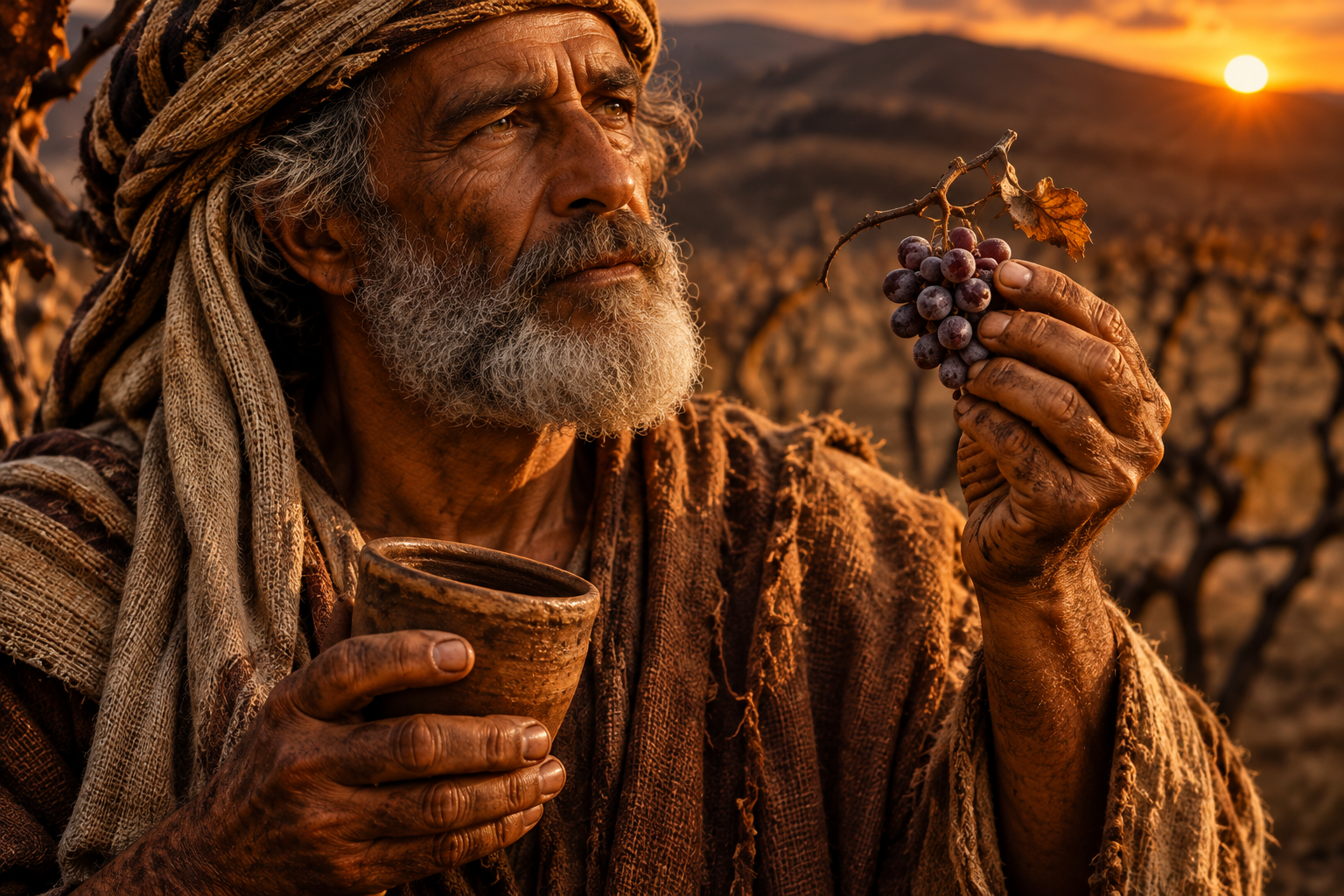
This theological arc traces a dramatic trajectory: beginning with Old Testament prophetic indictments of failed harvests and divine judgment, moving into the subtle sacramental signs of the gospels, and culminating in the apocalyptic visions of Revelation. By illuminating this master thread, we uncover how ancient ritual imagery unveils the central paradox of human destiny and divine redemption.
2. The “True Vine” Was a Direct Response to a Historic Failure
In the imagery of ancient Israel, the vineyard represented the climax of agricultural devotion—requiring years of clearing stones, terracing hillsides, and patient cultivation. In Isaiah 5, the Old Testament employs this agrarian intimacy to construct a poignant picture of divine heartbreak. God plants the house of Israel as a choice vineyard on a fertile hill. He clears its stones, plants it with the finest vines, and builds a watchtower in its midst—a detail that served as symbolic code for the Temple itself, the sacred center of divine presence and ritual life.
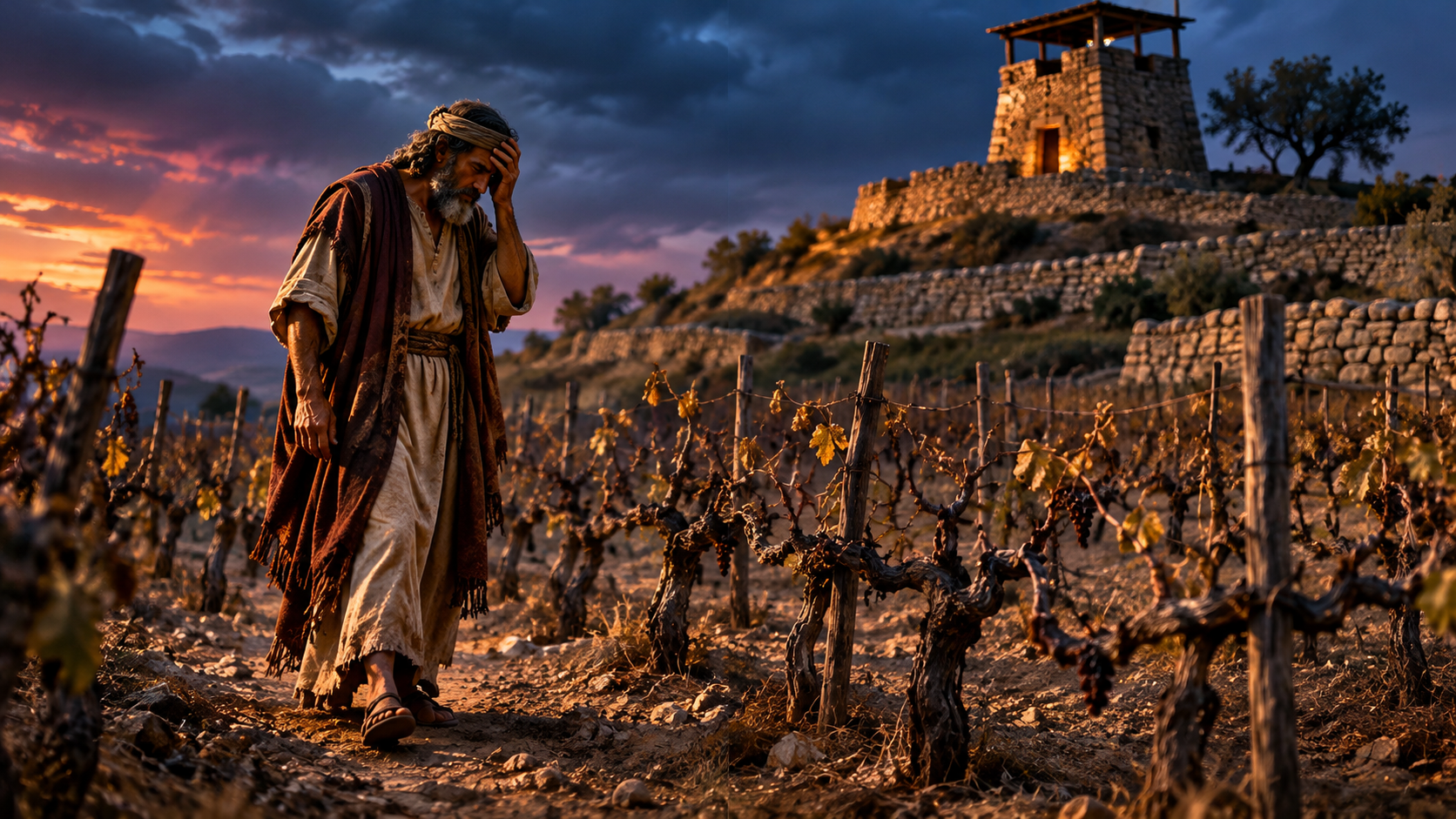
God anticipated a harvest of righteousness and justice. Instead, the soil yielded wild grapes—small, sour, tough-skinned fruit unfit for wine. Metaphorically, where God looked for mishpat (justice), He found bloodshed; where He looked for righteousness, He heard only the outcries of the oppressed. The temple watchtower and the elaborate ritual infrastructure could not force the unfaithful vine to yield true fruit.
“He looked for it to yield good grapes, but instead it yielded wild grapes… God looked for justice, but behold bloodshed.”
When Jesus steps forward in John 15:1 and declares, “I am the true vine, and my Father is the vinedresser,” His words execute a profound historical and covenantal correction. He presents Himself as the definitive replacement for the historic vine that failed. Christ accomplishes what covenant-bound Israel could not, offering Himself as the singular, righteous root. Believers are not called to cultivate their own self-generated righteousness, but to graft themselves into Him—abiding in the True Vine so that His life-giving juice may flow through their branches to produce abiding, holy fruit.
3. The Miracle at Cana and Unlocking the Biblical Mystery of Repurposed Ritual
The miracle at the wedding in Cana (John 2) is often treated as a mere deed of domestic convenience—an act of social rescue for a family running low on hospitality supplies. However, framed within John’s gospel as the first of seven deliberate “signs,” the event marks the quiet, subversive arrival of the Messianic Kingdom. The focal point of the miracle lies not merely in the creation of wine, but in the specific vessels Jesus chooses to use.
Rather than utilizing standard wine amphorae, Jesus instructs the servants to fill six massive stone jars. John takes care to note that these jars were reserved strictly for the Jewish rites of ceremonial purification under the Law of Moses. By taking these instruments of legalistic washing—holding between 150 and 180 gallons—and filling them to the brim with extraordinary, aged wine, Christ executed a dramatic act of symbolic repurposing.
- The Stone Jars: Originally designated strictly for legalistic ritual washing, representing the external, purifying demands of the Mosaic code.
- The Abundant Wine: Rich, kingdom abundance signaling that the era of shadow and ritual cleansing was being superseded by the overflowing joy and grace of the New Covenant.
By transforming external wash-water into the finest wine of the feast, Christ signaled that the ceremonial system had met its fulfillment. The Messianic banquet had quietly commenced, substituting external legal purity with internal, intoxicating kingdom joy.
4. Ancient Prophecy Details Two Completely Opposite “Cups”
Across the prophetic canon, the metaphor of the “cup” splits into two antithetical realities, establishing a stark binary that runs through the remainder of Scripture.
The first is the Cup of Blessing and Restoration. The prophet Amos envisions an eschatological restoration where the order of nature is overwhelmed by abundance: the plowman overtakes the reaper, and the mountains drip with sweet, young wine (Amos 9). Isaiah expands this vision in Isaiah 25, describing a great Messianic feast hosted by Yahweh Sabaoth (the Lord of Hosts) on His holy mountain. Isaiah explicitly notes that this banquet of rich food and well-aged wine is prepared for “all peoples”—a crucial textual distinction signaling the inclusive gathering of representatives from every tribe, tongue, and gentile nation into covenant fellowship, rather than an uncritical universalism. At this table, shame is removed, tears are wiped away, and death itself is swallowed up forever.
The second is the Cup of Wrath. In stark contrast, Jeremiah 25 presents a terrifying vision of divine retribution. Here, the cup contains the intoxicating wine of God’s righteous anger, poured out upon rebellious nations and unfaithful stewards alike.
“Take from my hand this cup of the wine of wrath, and make all the nations to whom I send you drink it.”
Prophetic literature permits no middle ground between these two vessels. Every human soul ultimately faces one of these two outcomes: either partaking in the cup of eternal covenant fellowship or drinking the cup of divine judgment against rebellion.
5. Golgotha: Unlocking the Biblical Mystery of the Hyssop Branch
To understand how the trajectory of the cup reaches its climax at Golgotha, one must pass through the imagery of John 6. In that discourse, Jesus scandalizes His hearers by insisting that true life requires eating His flesh and drinking His blood. Notably, when John records the Last Supper, he intentionally omits the physical passing of the bread and wine found in the other gospels. Instead, John uses the metaphors of John 6 and the vine of John 15 to emphasize the deeper spiritual reality: true communion is an existential, mystical union in which the believer abides in Christ and Christ in the believer.
This deep union illuminates Christ’s agony in the Garden of Gethsemane. As He faces the cross, He petitions the Father to “remove this cup” from Him. The cup He dreads is not merely physical death, but the terrifying metaphor of Jeremiah’s prophecy: the raw, undiluted cup of God’s wrath against human sin.
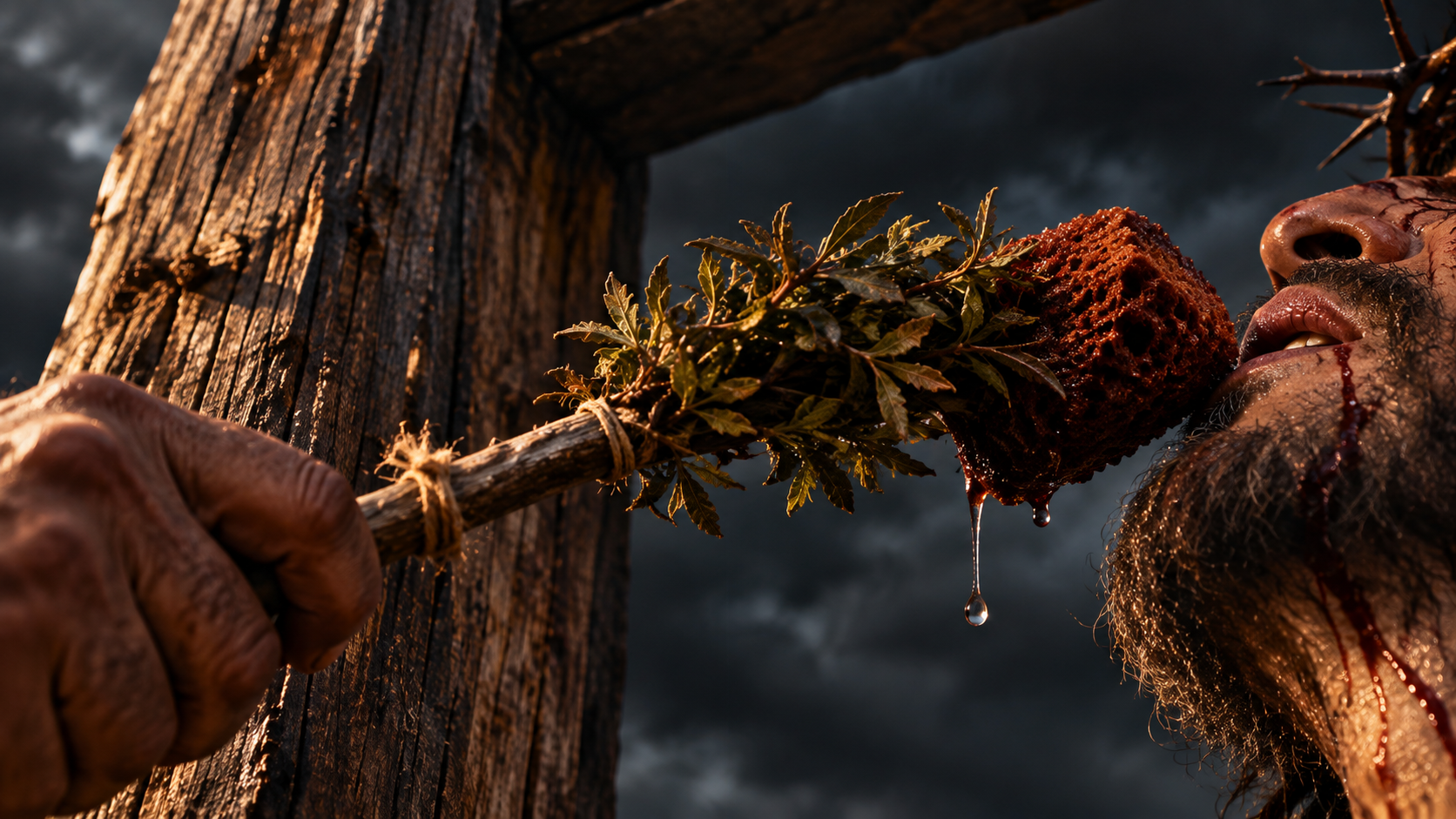
Yet, the Father does not remove it. At Golgotha, as Christ hangs near death, John records a minute detail loaded with Old Testament sanctuary imagery:
“A jar full of sour wine stood there, so they put a sponge full of the sour wine on a hyssop branch and held it to his mouth.” (John 19:29)
The mention of the hyssop branch is a deliberate callback to the night of the original Passover in Egypt (Exodus 12). Hyssop was the specific leafy brush used by Israelite families to paint the blood of the sacrificial lamb onto the lintels and doorposts of their homes, shielding them from the passing executioner of divine judgment.
By lifting the sour wine to Christ’s lips on a hyssop branch, the narrative signals that the ultimate Passover Lamb was completing His sacrificial work. Jesus literally drank the metaphorical cup of divine wrath to its dregs, taking the curse of sin into His own body. He drained the cup of judgment so that those united to Him might receive only the cup of blessing.
6. The Story Ends with a Final Choice in Revelation
The symbolic arc that begins in the cultivated fields of Isaiah and passes through the stone jars of Cana reaches its final resolution in the Book of Revelation. In the apocalyptic visions of Revelation 19, the divided destinies of humanity are laid bare through the twin images of the harvest.
On one side stand those who aligned themselves with worldly systems, drinking the intoxicating, deceptive wine of Babylon. They are depicted as being gathered into the “great winepress of the fury of the wrath of God,” where human rebellion is crushed under divine justice.
On the other side stand the redeemed. Arrayed in bright, pure fine linen—granted to them not through legalistic merit, but washed clean in the blood of the Lamb—they gather for the consummation of human history: the Marriage Supper of the Lamb. The narrative that opened with a quiet, miraculous supply of wine at a local wedding feast in Cana finds its grand, cosmic fulfillment at this eternal table.
7. Conclusion: Unlocking the Biblical Mystery of Your Unavoidable Choice
From the wild, sour grapes of Isaiah’s failing vineyard to the True Vine of Golgotha, and from the ceremonial water pots of Cana to the blood-stained hyssop branch of the cross, the biblical narrative maintains an unyielding thematic consistency. By unlocking the biblical mystery of ancient winemaking and covenant rituals, we see this is not decorative imagery; it is an urgent, theological map pointing to an unavoidable choice.
Christ bore the unbearable weight of the cup of divine wrath on the cross so that humanity might instead sit at the Messianic table and drink the wine of eternal joy. As the final pages of the biblical story draw near, the existential question remains for every heart: Will you drink the bitter, self-chosen cup of judgment brought on by rebellion, or will you accept the cup of blessing freely offered at the Savior’s table?
Scriptural References with Hints
- Isaiah 5:1–7 – Hint: The Song of the Unprofitable Vineyard that yielded wild grapes.
- John 15:1–11 – Hint: Jesus declares, “I am the true vine,” and calls believers to abide in Him.
- John 2:1–11 – Hint: The wedding at Cana where Jesus transforms water meant for ceremonial purification into fine wine.
- Amos 9:13–15 – Hint: Prophecy of restorative abundance where mountains drip sweet wine.
- Isaiah 25:6–9 – Hint: The Messianic feast on God’s mountain with well-aged wine for all peoples.
- Jeremiah 25:15–16 – Hint: The terrifying prophecy of the cup of the wine of God’s wrath.
- John 6:53–56 – Hint: Discourse on eating Christ’s flesh and drinking His blood.
- Matthew 26:39 / Luke 22:42 – Hint: Gethsemane agony, asking the Father to let “this cup” pass.
- Exodus 12:22 – Hint: Original Passover instruction to use hyssop to apply lamb’s blood.
- John 19:28–30 – Hint: Crucifixion account mentioning sour wine on a hyssop branch.
- Revelation 14:17–20 / 19:15 – Hint: Apocalyptic imagery of the great winepress of God’s wrath.
- Revelation 19:6–9 – Hint: The triumphant visual of the Marriage Supper of the Lamb.
AI Assistance Disclaimer: This post was drafted using Google Notebook to help with content synthesis and outlining. Inspired by the sermon, The Fruit of The Vine by Rev. Rodman Cory